Wagering requirements can make a promotional offer look more generous than it is, especially when the game and the casino use different rules. Before treating a bonus as available spending money, use the sweet bonanza demo to become familiar with the interface and then inspect the operator’s written terms. A demo can show how the slot works, but it cannot confirm a casino’s contribution rate, maximum bet, expiry date or withdrawal conditions. Those details belong to the promotion, not the game itself.
Separate the slot rules from the promotion terms
The first practical step is to identify which rules apply to the activity you are considering. The slot’s own rules describe its grid, winning combinations, Tumble feature, Scatter symbols, Free Spins and any in-game options. They may also show the RTP configuration and available stake range. None of those details automatically creates a bonus, determines how much wagering is required or promises that promotional funds can be withdrawn.
Wagering requirements are created by the casino’s offer. They usually state how many times a qualifying amount must be played before bonus-related funds become eligible for withdrawal. The qualifying amount might be the bonus alone, the deposit and bonus together, or another definition set out in the promotion. A requirement such as “30x” is therefore incomplete unless you know what amount the multiplier applies to.
Promotional free spins need the same separation. They are not identical to the built-in Free Spins feature triggered inside the game by Scatter symbols. Casino-issued free spins can have their own value, contribution rate, expiry period and conversion rules. Read the offer page, bonus rules and any terms linked from the account area together, rather than assuming that the slot’s information screen explains the promotion.
Calculate the requirement before accepting an offer
Once the qualifying amount is clear, calculate the headline turnover in simple steps. If a promotion gives a $50 bonus and applies a 20x requirement to the bonus, the stated turnover is $1,000. If the casino applies 20x to a $50 deposit plus a $50 bonus, the figure becomes $2,000. These examples are only illustrations; the operator’s definition controls the real calculation.
Next, check whether every wager counts in full. A promotion may assign 100% contribution to one game, a smaller percentage to another, and exclude some categories entirely. If a game contributes 20%, a $1 wager may count as only $0.20 toward the requirement. The number of spins, the stake per spin and the contribution percentage must be considered together when estimating the practical amount of play.
Do not confuse theoretical turnover with a guaranteed cost or outcome. A player could complete the required amount with funds remaining, lose the balance before reaching it, or encounter a feature that is excluded under the terms. The calculation is a way to understand the obligation, not a forecast of winnings. It is also sensible to write down the qualifying amount, multiplier and contribution rate before opting in.
Check the restrictions that can change the result
The multiplier is only one part of a promotion. Maximum-bet clauses can restrict the stake allowed while bonus funds are active, and exceeding that limit may void the bonus or associated winnings under the stated terms. The limit might apply per spin, per round or to a feature purchase. If the wording is unclear, ask the operator before playing rather than relying on a general industry assumption.
Expiry rules can be equally important. A bonus may need to be claimed within one period and wagered within another. Promotional free spins may expire sooner than deposit bonuses, while winnings from those spins may have a separate conversion deadline. Also look for rules about cancelled bonuses, partial withdrawals, game exclusions, minimum odds or a maximum amount that can be converted into cash.
For a broader perspective on gambling-related risks and support, readers can consult CAMH information about problem gambling. This does not confirm any casino’s promotion or contribution rates. It is simply a useful Canadian health resource when deciding whether the time, money and conditions attached to an offer fit within a personal limit.
Use the information screen for game-specific checks
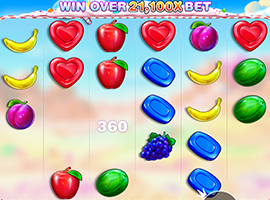
After reading the promotion, open the slot’s information panel and verify the version being offered. The original release uses a 6×5 layout and a Pay Anywhere system, with wins formed when enough matching symbols appear across the grid. The Tumble feature removes winning symbols and allows new symbols to fall into place. These mechanics can affect the pace of play, but they do not reduce a wagering requirement.
The information screen may also show the RTP enabled for that particular casino version. Published configurations can differ, so do not assume that a figure found elsewhere applies to the loaded game. The same caution applies to stake denominations, Ante Bet settings, Bonus Buy availability and other optional features. Operator and jurisdictional differences can change what appears in the interface.
Optional features deserve special attention when bonus funds are involved. An Ante Bet-style setting can raise the stake while changing the chance of entering the game’s Free Spins feature, and a Bonus Buy may cost a multiple of the base bet where it is permitted. Whether such choices count toward a promotion, breach a maximum-bet rule or are excluded altogether must be determined from the casino’s terms.
Make a decision before you opt in
A useful decision process begins with four questions: What amount is multiplied? Which games or features contribute? What is the maximum permitted stake? When does the offer expire? If any answer is missing, pause before accepting the promotion. The operator’s stated requirements are the relevant source, and customer support should clarify ambiguous wording in writing.
Then compare the offer’s practical value with its restrictions. A large headline bonus may have a high multiplier, low game contribution, short expiry period or a strict cash-out ceiling. A smaller offer with clearer conditions may be easier to understand, although no promotion removes the possibility of losing money. Never increase a stake simply to finish a requirement faster.
Finally, decide how you will track the offer. Keep a record of the starting balance, qualifying amount, expiry date and remaining turnover if the account displays it. Stop if the promotion becomes confusing or encourages spending beyond the amount you planned. A demo can help with navigation and basic mechanics, but it cannot test bonus compliance, verify the operator’s accounting or establish that a promotional strategy will produce a profit.
Questions readers often ask
Does a game’s Free Spins feature count as bonus wagering?
Not automatically. Free Spins triggered by the game’s own Scatter symbols are part of its standard mechanics. Promotional free spins issued by a casino may be subject to wagering requirements, contribution percentages and expiry rules. Check the specific offer terms to see how their winnings are treated and whether the game qualifies.
Does a demo mode satisfy wagering requirements?
No. Demo play uses virtual credits and does not create real-money turnover. It can help you understand the controls, Tumble sequence, information screen and available options. It cannot activate a casino promotion, reduce a remaining requirement, confirm a contribution rate or make any resulting balance eligible for withdrawal.
What should I do if the terms do not state the multiplier base?
Do not assume that the multiplier applies to the bonus alone or to the combined deposit and bonus. Save a copy of the promotion wording and ask the operator for clarification before opting in. If the answer remains unclear, declining the offer avoids accepting an obligation you cannot accurately calculate.